
Removing Barriers to Care Through Community Support
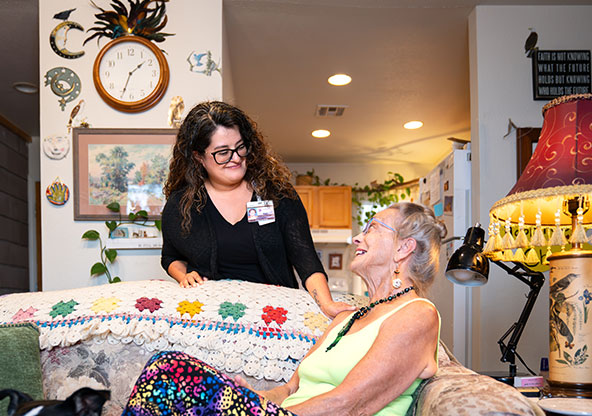
Christine Anderson moved to Alamogordo from Maine to live with a family member during the 2020 pandemic.
After a year, the move didn’t work out, and she found work on a ranch in West Texas. She said it wasn’t a good situation and she needed to leave.
In her seventies, Anderson was homeless and moved back to Alamogordo, where a friend let her stay at their house temporarily.
Homelessness didn’t look like traditional stereotypes. Instead, for several years, Christine couch-surfed, lived in broken-down RVs and stayed with friends as long as they would have her.
She was exhausted and beginning to lose hope.
Things began to change, however, when she met CHRISTUS Health Community Health Worker Kam Dozier.
“I help connect people to resources in the community for things that are affecting their social determinants of health,” Dozier said.
Social determinants of health are the conditions in a person's daily life that affect their health and well-being, such as transportation, access to nutritious food, stable housing, income, education and social support. These factors can affect a person's ability to get healthcare when they need it.
To help address those challenges, CHRISTUS Community Health provides community health worker services throughout the region. Community health workers help people identify barriers affecting their health and connect them with resources that support their well-being, from transportation and food assistance to housing resources, insurance navigation and other community services.
In a rural community like Alamogordo, resources can be limited and many people do not know where to turn for help. Dozier said referrals often begin with a single need, but conversations frequently uncover other challenges affecting a person's health and well-being.
“The referral or the phone call we get may be for one thing, and then you turn over 10 different things that they need help with,” Dozier said.
A Trusted Connection
When Anderson arrived in Alamogordo, she was starting over.
Far from family and trying to rebuild stability after a difficult period in her life, even routine tasks could feel overwhelming.
Navigating transportation, scheduling appointments and keeping up with an increasingly digital world often add to that stress.
“Everything is turning into going online for this and going online for that,” Anderson said. “I just can't seem to grasp that.”
Over time, Dozier became a trusted source of support, helping Anderson get to medical appointments, work through insurance questions, request caregiver support after an injury, order groceries and stay connected through her tablet, phone and laptop. When another problem came up, Anderson knew she had someone she could call.
Dozier played a part in helping Anderson move into low-income senior housing, which is a challenge in a rural community where public housing waitlists can stretch for years.
Living far from family and trying to navigate an increasingly digital world on her own, Anderson said knowing she has someone she can call for help has brought peace of mind.
“I call Kam,” Anderson said with a laugh. “She takes care of it.”
Removing Barriers
Angela Samora, a CHRISTUS Health community health worker, starts helping a new patient with a practical problem.
The common challenges she helps with are finding help paying a medical bill, finding transportation to an appointment, accessing food or signing up for Medicare. But those challenges rarely exist in isolation.
“We try to help them navigate whatever they need,” Angela said. “Not just healthcare. Housing, food assistance and Social Security applications. Whatever barrier they're facing.”
Sometimes it's as simple as helping somebody fill out an application. Some people don't understand the process, so they just won't do it.
“If we help them fill it out, it helps move things forward,” she said.
For Garland Wilson, the support has gone beyond medical appointments and paperwork.
Living alone and managing multiple health conditions can make everyday challenges feel overwhelming. Over the past several months, Angela has helped him navigate housing options, access essential services and find support for challenges he may not have been able to address on his own.
“It changes my life,” Wilson said. “It actually does. It makes my life easier.”
More than Medical Care
For the community health workers who do this work, the resources matter. But just as important is the trust they build with the people they serve, often becoming a steady source of support when life feels uncertain.
CHRISTUS Health Community Health Worker Rebecca Silva said she knows firsthand what it feels like to need resources and search for hope and support for her family. Those experiences have given her a deeper understanding of what it means to feel seen and supported by a community.
